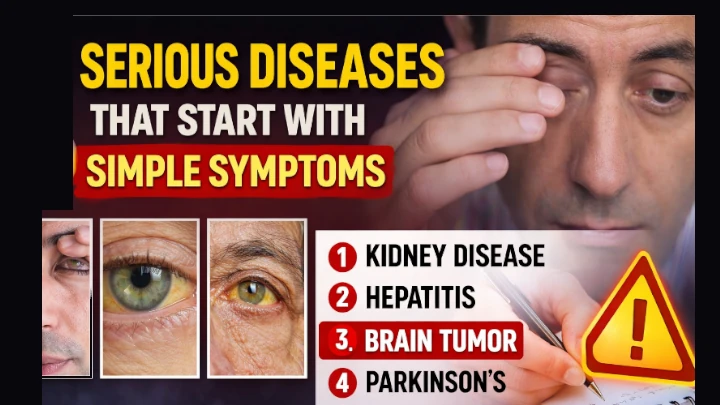
Many serious diseases do not begin with extreme pain or dramatic signs. Instead, they often start with small, simple symptoms that people usually ignore. Feeling tired, bloated, thirsty, or forgetful may look harmless, but sometimes these are early warning signs of serious health conditions.
Understanding these early symptoms can help you take action early, get medical advice on time, and possibly save your life. Let’s look at some serious diseases and the simple symptoms they often start with.
1. Kidney Disease – Puffy Eyes in the Morning
If you often wake up with swollen or puffy eyes, especially in the morning, it could be more than lack of sleep. Kidney disease can cause fluid retention in the body, which leads to puffiness around the eyes and face. If this happens regularly, it is important to check kidney function.
2. Lung Cancer – Voice Changes
A hoarse or changing voice that does not improve over weeks should not be ignored. Lung cancer can affect nerves connected to the voice box, leading to voice changes.
Many people think it is just a cold or throat infection, but persistent hoarseness needs medical attention.
3. Parkinson’s Disease – Smaller Handwriting
If your handwriting is becoming smaller and cramped, it may be an early sign of Parkinson’s disease. This condition affects movement and muscle control.
Changes in handwriting are often one of the earliest symptoms noticed by patients or family members.
4. Diabetes – Always Feeling Thirsty
Feeling constantly thirsty, even after drinking water, can be an early sign of diabetes. High blood sugar levels cause the body to lose more fluids, leading to dehydration and frequent thirst. Other signs may include frequent urination and fatigue.
5. Thyroid Imbalance – Hair Falling From Eyebrows
Hair loss is common, but losing hair from the outer part of your eyebrows can signal a thyroid imbalance. Thyroid hormones control metabolism, energy, and hair growth. When hormone levels are abnormal, it can affect hair, skin, and weight.
6. Liver Disease – Bloating After Meals
Feeling bloated after eating small meals may be linked to liver problems. The liver helps digest fats and remove toxins. When it is not working properly, digestion becomes slow, leading to gas, bloating, and discomfort.
7. Colon Cancer – Thinner Stools
A noticeable change in stool shape, especially thin or pencil-like stools, can be an early sign of colon cancer. It may indicate a blockage or narrowing in the colon. If this change lasts for several weeks, consult a doctor immediately.
8. Heart Disease – Shortness of Breath
If you feel breathless while climbing stairs or doing light activity, it may be related to heart disease. The heart may not be pumping enough blood and oxygen to the body. Many people mistake this for aging or lack of fitness.
9. Alzheimer’s Disease – Misplacing Things Often
Everyone forgets things sometimes, but frequently misplacing items and struggling to remember recent events may be an early sign of Alzheimer’s disease. Early diagnosis can help slow progression and improve quality of life.
10. Pancreatic Cancer – Unexplained Back Pain
Persistent back pain without any injury or clear reason can be an early sign of pancreatic cancer. This pain may come and go and often gets ignored. If it continues for weeks, medical evaluation is necessary.
11. Brain Tumor – Morning Headaches and Nausea
Headaches that are worse in the morning and accompanied by nausea or vomiting can indicate increased pressure in the brain. Brain tumors can cause these symptoms, especially if headaches are frequent and severe.
12. Acid Reflux (GERD) – Chest Burning After Meals
A burning sensation in the chest after eating, commonly called heartburn, is often due to acid reflux or GERD. While common, untreated GERD can damage the esophagus and increase the risk of serious complications.
13. Hepatitis – Yellowing of Eyes
If the white part of your eyes turns yellow, it may be a sign of hepatitis or liver damage. This condition, called jaundice, happens when the liver cannot process bilirubin properly.
14. Osteoporosis – Frequent Bone or Back Pain
Frequent bone pain or back pain, especially in older adults, can signal osteoporosis. This condition weakens bones, making them more likely to break even with minor falls or stress.
Most Asked Questions and Answer-
Q. Can serious diseases really start with simple symptoms?
Ans- Yes. Many serious diseases begin with mild signs like tiredness, bloating, thirst, or headaches. These symptoms are often ignored, which delays diagnosis.
Q. Which disease starts with puffy eyes in the morning?
Ans- Kidney disease can cause puffy eyes due to fluid retention. If this happens often, kidney function tests are advised.
Q. Is constant thirst a sign of diabetes?
Ans- Yes. Feeling thirsty all the time is a common early symptom of diabetes, especially when combined with frequent urination and tiredness.
Q. Can voice change be a sign of cancer?
Ans- Yes. Long-lasting voice changes or hoarseness may be an early sign of lung or throat cancer and should be checked if it lasts more than 2–3 weeks.
Q. What disease causes handwriting to become smaller?
Ans- Parkinson’s disease often starts with smaller, cramped handwriting due to changes in muscle control and movement.
Q. Are thin stools a serious symptom?
Ans- Yes. Thin or pencil-like stools can be an early warning sign of colon cancer and should not be ignored if persistent.
Q. Why do I feel breathless while climbing stairs?
Ans- Shortness of breath during mild activity can be a sign of heart disease, anemia, or lung problems and needs medical evaluation.
Q. Is frequent forgetting a normal aging sign?
Ans- Occasional forgetting is normal, but frequently misplacing items or memory loss may be an early sign of Alzheimer’s disease.
Q. Can back pain be a sign of cancer?
Ans- Yes. Unexplained, long-lasting back pain can sometimes be linked to pancreatic cancer or bone issues.
Q. What do morning headaches with nausea indicate?
Ans- Morning headaches with nausea may be a sign of brain tumor, migraine, or increased brain pressure and should be checked if recurring.
Q. Is chest burning after meals dangerous?
Ans- Chest burning is usually caused by acid reflux (GERD). If untreated, it can damage the food pipe and increase cancer risk.
Q. Why do eyes turn yellow?
Ans- Yellowing of eyes is a sign of hepatitis or liver disease, caused by buildup of bilirubin in the blood.
Q. What disease causes frequent bone or back pain?
Ans- Osteoporosis weakens bones and often causes frequent bone pain or fractures, especially in older adults.
Q. Can early detection save lives?
Ans- Absolutely. Early detection improves treatment success, reduces complications, and can save lives.
Q. Should I panic if I have one symptom?
Ans- No. One symptom alone does not mean disease. But persistent or multiple symptoms should always be checked.
Q. How can I protect myself from serious diseases?
Ans- Listen to your body, Don’t ignore change, Get regular health checkup and Maintain a healthy lifestyle.
Conclusion
Many life-threatening diseases start with simple symptoms that are easy to ignore. Puffy eyes, thirst, bloating, voice changes, or mild pain may seem normal, but when these signs persist, they should never be taken lightly.
Early detection can prevent complications, improve treatment success, and save lives. Always listen to your body, notice changes, and consult a healthcare professional if symptoms last longer than expected.
Remember, your body warns you before serious illness begins. Paying attention today can protect your health tomorrow.