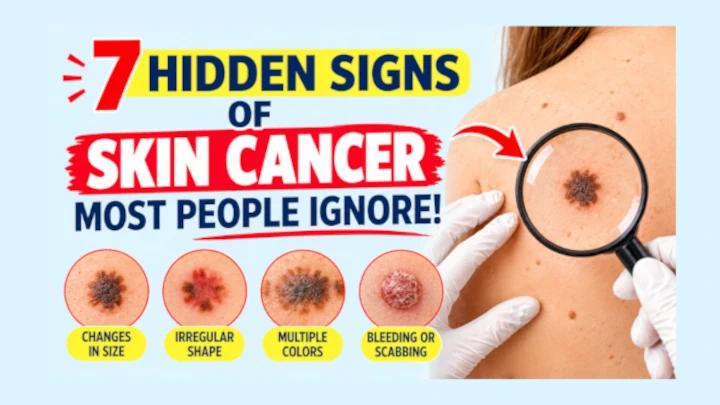
Skin cancer can develop on any part of the body, including areas that are rarely exposed to sunlight, such as the back. Because it is difficult to see your back without a mirror or someone else’s help, unusual skin changes can go unnoticed for months.
The good news is that many skin cancers can be treated successfully, especially when detected early. However, some types can grow into surrounding tissue or spread to other parts of the body if left untreated.
Recognizing the early warning signs of skin cancer on the back can help you seek medical attention promptly. Although many moles, spots, and bumps are harmless, a new or changing skin growth should not be ignored.
Here are seven important skin changes to watch for and when to have them checked by a healthcare professional.
7 Early Warning Signs of Skin Cancer on the Back
1. A New or Unusual Mole
A new mole or dark spot appearing on your back may be harmless, but it is worth monitoring, especially if it looks different from your other moles.
Melanoma, a potentially serious type of skin cancer, can develop as a new spot rather than from an existing mole.
Watch for a spot that:
- Looks noticeably different from your other moles.
- Has an unusual shape or uneven borders.
- Changes in appearance over time.
- Continues to grow or develop new colors.
What to do: Take note of when you first noticed the spot. If it looks unusual or continues to change, arrange an appointment with a dermatologist.
2. A Mole That Changes in Size, Shape, or Color
Most ordinary moles remain relatively stable over time. A mole that changes in size, shape, color, or texture deserves attention.
You may notice that it becomes darker, develops several colors, grows unevenly, or loses its previously smooth outline.
The ABCDE rule can help you recognize warning signs of melanoma:
- A — Asymmetry: One half looks different from the other.
- B — Border: The edges are irregular, blurred, or uneven.
- C — Color: The spot contains different shades of brown, black, red, white, or blue.
- D — Diameter: The spot is often larger than 6 millimeters, although melanomas can be smaller.
- E — Evolving: The spot changes in size, shape, color, or appearance.
Not every melanoma displays all these features. A changing mole should be evaluated even if it does not match every warning sign.
3. A Mole or Spot That Itches, Hurts, or Bleeds
Moles do not usually cause persistent discomfort. If a mole or skin spot becomes repeatedly itchy, tender, painful, crusted, or prone to bleeding, it should be examined.
These symptoms do not automatically mean cancer. Irritation, scratching, injuries, and other skin conditions can cause similar problems.
However, persistent or unexplained symptoms may sometimes indicate skin cancer, particularly when accompanied by visible changes in the spot.
What to do: Avoid picking or scratching the area. Arrange a medical evaluation if the symptoms persist, recur, or occur alongside changes in the mole’s appearance.
4. A Large Brown Spot With Uneven Dark Areas
A brown spot with darker speckles, irregular borders, or several shades of color may be a warning sign of melanoma.
Some melanomas resemble ordinary moles or flat brown patches, making them difficult to identify without a professional examination.
Pay attention to spots that gradually become larger, develop uneven coloring, or look different from the surrounding skin.
There is no single size that determines whether a spot is cancerous. Even a small or flat lesion can require evaluation if it is changing or looks unusual.
What to do: Do not rely on color or size alone to decide whether a spot is harmless. Have suspicious or changing patches examined by a dermatologist.
5. A Bump That Bleeds or Does Not Heal
A persistent bump or sore on the back may be another warning sign of skin cancer.
Some skin cancers, particularly basal cell carcinoma, can appear as shiny or pearly bumps that bleed easily. Squamous cell carcinoma may appear as a firm, rough, scaly bump or a sore that does not heal properly.
Watch for a growth that:
- Bleeds repeatedly with little or no injury.
- Forms a crust, heals temporarily, and then reopens.
- Gradually increases in size.
- Develops an open sore or persistent scab.
What to do: Seek medical advice for a bump or sore that does not heal, repeatedly bleeds, or continues to grow. Do not wait for it to reach a particular size before getting it checked.
6. A Persistent Red, Scaly, or Rough Patch
Skin cancer does not always appear as a dark mole. Some types can look like red, pink, or skin-colored patches that are rough, scaly, crusted, or inflamed.
A persistent patch may resemble eczema, a rash, or another common skin condition. Squamous cell carcinoma, for example, can develop as a rough or scaly area that does not resolve.
Look for a patch that:
- Remains for an unusually long time.
- Becomes thicker or develops a crust.
- Bleeds or forms a sore.
- Changes despite ordinary skin care.
Redness and scaling are common in many noncancerous conditions, so appearance alone cannot establish a diagnosis.
What to do: Have a persistent or changing patch assessed by a healthcare professional, particularly if it fails to improve or develops additional warning signs.
7. A Pimple-Like Growth That Keeps Getting Bigger
A skin cancer growth may initially resemble a pimple, insect bite, or small bump. Unlike an ordinary pimple, however, a suspicious growth may persist, enlarge, bleed, or repeatedly form a crust.
Some basal cell carcinomas appear as smooth, shiny bumps, while other skin cancers may form firm or raised growths.
Be cautious if a bump:
- Does not heal like a typical pimple.
- Continues growing over several weeks.
- Bleeds easily or develops a persistent sore.
- Changes in color, shape, or texture.
What to do: Avoid squeezing or treating a persistent growth repeatedly with acne products without knowing what it is. A clinician can determine whether further examination or a skin biopsy is necessary.
Additional Skin Cancer Warning Signs You Should Know
The seven signs above are not the only possible symptoms. Skin cancer can look different from person to person, and some lesions do not cause pain or itching.
Another important warning sign is the “ugly duckling” sign. This means a mole or spot looks noticeably different from the other spots on your body, even if it does not display every feature of the ABCDE rule.
Also, skin cancer can occur on areas that receive little sunlight. Checking your back, shoulders, scalp, and other hard-to-see areas is therefore important.
Practical Tips to Check Your Back for Skin Cancer
Regularly checking your skin can help you notice changes that might otherwise go unnoticed.
1. Use a Mirror
Stand in front of a full-length mirror and use a handheld mirror to examine your back, shoulders, and the backs of your arms. Ask a trusted person to help you check areas that are difficult to see.
2. Keep Track of Changes
Take clear photographs of unusual moles or spots, when practical, to compare their appearance over time. Do not delay medical care while waiting to see whether a spot changes.
3. Protect Your Skin From UV Radiation
Ultraviolet (UV) radiation from sunlight and tanning devices can damage skin cells and increase the risk of skin cancer.
Protect your skin by:
- Applying broad-spectrum sunscreen with SPF 30 or higher to exposed skin.
- Reapplying sunscreen approximately every two hours outdoors and after swimming or heavy sweating.
- Wearing protective clothing and seeking shade when sunlight is strong.
- Avoiding indoor tanning devices.
4. Know Your Risk Factors
Your risk may be higher if you have a personal or family history of skin cancer, a history of intense sun exposure or sunburn, many moles, or a weakened immune system.
Skin cancer can affect people of all skin tones. Having darker skin does not eliminate the risk.
5. Know When to See a Dermatologist
Arrange a medical appointment if you notice a new or changing mole, an unusual growth, a persistent scaly patch, or a sore that repeatedly bleeds or fails to heal.
You do not need to wait until a spot becomes painful or reaches a particular size. A dermatologist can examine the area and determine whether further testing, such as a skin biopsy, is needed.
People with a history of skin cancer or other significant risk factors may benefit from a personalized skin examination schedule.
Frequently Asked Questions
1. What are the first signs of skin cancer on the back?
Early signs may include a new or unusual mole, a changing spot, an irregularly colored patch, a growing bump, or a sore that does not heal. Some skin cancers cause no pain or other noticeable symptoms.
2. Can skin cancer on the back look like a pimple?
Yes. Some skin cancers can resemble pimples, insect bites, or small bumps. A growth that persists, enlarges, bleeds, or repeatedly develops a crust should be examined by a healthcare professional.
3. Are itchy moles always a sign of skin cancer?
No. Itching can occur because of dry skin, irritation, or other harmless conditions. However, a mole that persistently itches, bleeds, hurts, or changes in appearance should be checked.
4. How quickly can skin cancer develop or spread?
The speed varies depending on the type of skin cancer and the individual case. Some grow slowly, while others can be more aggressive. It is not possible to determine how quickly a suspicious spot will progress from appearance alone, so seek medical assessment rather than waiting.
5. Can you have skin cancer without a changing mole?
Yes. Skin cancer may appear as a new growth, a rough patch, a shiny bump, or a non-healing sore without resembling a typical mole. Any persistent or unusual skin change deserves attention.
Conclusion
Recognizing the warning signs of skin cancer on the back is an important step toward protecting your skin. A new mole, a changing spot, an unusual bump, a persistent scaly patch, or a sore that does not heal may need medical evaluation.
Remember that not every unusual spot is cancer, and not every skin cancer looks the same. You cannot confirm or rule out skin cancer based on appearance alone.
Check your skin regularly, protect yourself from excessive UV exposure, and consult a dermatologist if you notice anything new, unusual, or changing. Early evaluation can help identify skin cancer when treatment is generally more effective.
Medical disclaimer: This article is for educational purposes only and is not a substitute for professional medical advice, diagnosis, or treatment.
Medical Sources for Fact-Checking
- American Academy of Dermatology: Skin Cancer Signs and Symptoms
- NHS: Symptoms of Melanoma Skin Cancer
- CDC: Symptoms of Skin Cancer
References